
What is minimum ignition energy (MIE) and why does it matter?
Minimum ignition energy (MIE) is one of the key parameters determining how easily a given substance can ignite under specific conditions. In industries where flammable gases, dusts, or vapors are present, knowledge of MIE allows for effective explosion risk assessment and implementation of appropriate protective measures. In this article, we explain exactly what MIE is, what factors affect it, and why it is essential in ensuring safety in industrial facilities.
Minimum ignition energy – what is it and why do we need to know it?
In industrial environments where gases, vapors, or dusts are handled, a key issue is determining what minimum amount of energy can lead to their ignition. This value is called the minimum ignition energy (MIE) and allows assessment of whether a given environment poses a real explosion risk. In practice, this means that if any energy source – even as inconspicuous as an electrostatic spark – reaches a value equal to or greater than the MIE, it can cause the substance to ignite in the air.
Knowledge of this parameter is essential not only for engineers designing industrial installations but also for those responsible for safety in workplaces. MIE allows for appropriate selection of protective measures, building materials, or ventilation methods, which directly translates to risk minimization.
While delving into the topic of MIE, it’s worth expanding your knowledge with information about explosion limits of gases, which we described in our previous blog post.
Provide your company with a risk assessment that genuinely improves security.
The spark that changes everything – how minimum ignition energy affects industrial safety?
Not every flammable substance is equally susceptible to ignition. The value of minimum ignition energy can vary greatly depending on the type of substance and environmental conditions.
- For example, gases such as hydrogen or acetylene have extremely low MIE values, meaning that even a small electrostatic discharge can cause ignition.
- Dusts, especially organic ones, can pose a hazard even when not visibly suspended in the air, because their ignition often depends on concentration and humidity.
Knowledge of MIE is fundamental to assessing what protective measures should be implemented in a given workplace. Whether it involves chemical processes, storage of flammable substances, or operation of industrial installations, considering this value allows avoiding dangerous situations.
Not every spark is dangerous, but… which ignition sources pose a real risk?
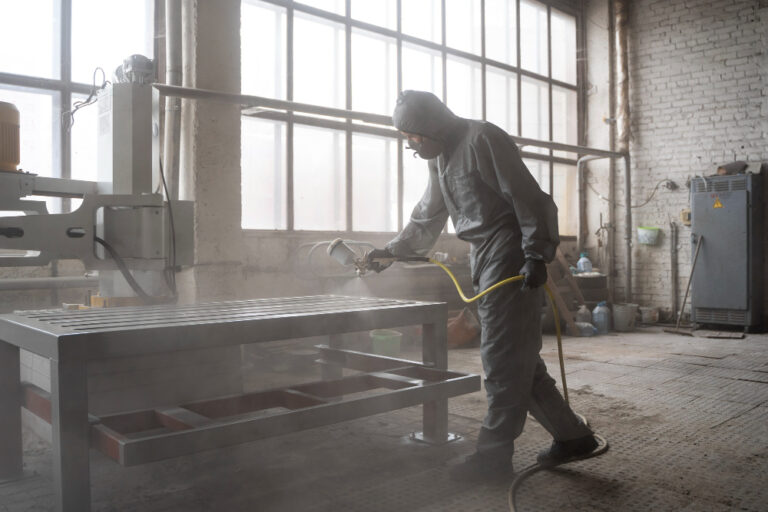
Electrostatic discharges, mechanical friction, heating machine elements – these are just some of the ignition sources that can lead to an explosion if the energy exceeds the MIE value. It often seems that an open flame is needed for ignition, but in reality, a sufficiently strong spark or even local overheating of equipment surfaces is enough. Particularly dangerous can be technological processes that generate dusts, such as woodworking, grain milling, or working with chemical powders. In such environments, the MIE energy can be so low that even a small spark from a damaged electrical cable is sufficient for ignition. This is precisely why it is so important to use appropriate protective measures such as antistatic systems, ventilation, or regular equipment maintenance.
Installation design and MIE – how engineers eliminate the risk of explosion?
Knowledge about minimum ignition energy finds application already at the stage of designing industrial installations. It is at this stage that key decisions are made regarding the choice of materials, protection methods, and risk reduction strategies. For example, in areas with increased explosion hazard, equipment grounding, antistatic wires, and explosion-proof safeguards are used, which eliminate the possibility of sparking. Additionally, where possible, the concentration of flammable substances in the air is reduced through appropriately selected ventilation and filtration systems. Knowledge of MIE also allows for the use of equipment compliant with ATEX standards, which are designed in such a way that their operation does not generate potential ignition sources. Every stage – from design to operation – must comply with the designated MIE values to ensure maximum safety of people and property.
How to reduce the risk? Proven ways to control minimum ignition energy in the workplace
The mere fact that a given material has a specific minimum ignition energy does not mean that the hazard must be constant. There are effective ways to minimize the risk. The first step is to eliminate potential ignition sources, which means, for example, using only spark-proof equipment, monitoring machine operating temperatures, and ensuring effective ventilation. The next step is limiting the emission of dusts and gases, because the lower their concentration in the air, the harder it is to reach the MIE value. Regular staff training is also important, because even the best-designed protective measures can fail if they are not used according to the assumptions. Finally, it is important to systematically conduct safety audits that allow monitoring whether the implemented procedures effectively eliminate the explosion hazard.
Why does MIE differ for different substances and what are the implications?
As we mentioned earlier – each substance has a different minimum ignition energy value, and these differences result from its chemical and physical properties. Natural gas, hydrogen, or acetylene ignite at much lower energy values than, for example, coal or sugar dusts. A key role is also played by the concentration of the substance in the air – too low or too high a concentration can make ignition impossible. Air humidity, ambient temperature, or pressure also affect the MIE value, which is why in practice each industrial installation should be analyzed individually. If a substance exhibits a particularly low MIE value, it means that even the smallest electrostatic discharge can pose a real threat.
Understanding minimum ignition energy (MIE) is one thing, but effective explosion risk management requires a professional approach. At Atex Consulting, we specialize in Explosion Risk Assessment and help companies implement effective solutions compliant with ATEX standards. Cooperation with us ensures that every installation, technological process, or explosion hazard zone will be thoroughly analyzed, and the implemented protective measures will genuinely increase safety. If you want to be sure that your company is adequately protected against hazards related to MIE – contact us!